
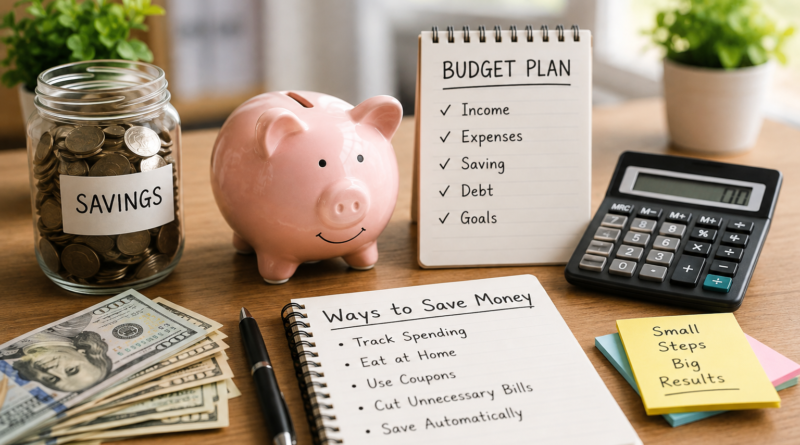
How to Save Money Fast on a Low Income Today
How to Save Money Fast on a Low Income: Practical Ways
Saving money can feel almost impossible when your paycheck already seems to disappear on rent, food, transport, bills, and other essential expenses. However, learning how to save money fast on a low income does not always mean finding a huge amount of extra cash overnight. In many cases, it starts with understanding where your money goes, reducing avoidable costs, and building a realistic savings habit.
A low income can create genuine financial pressure, so the goal is not to follow a perfect budget that ignores real life. The goal is to create more financial breathing room, even if you start with a small amount.
You might only be able to save $10, $25, or another small amount from each paycheck at first. That still matters. Small, regular deposits can gradually help you build emergency savings, improve financial stability, and reduce the stress of unexpected expenses.
This guide explains practical ways to save money on a low income, including budgeting, reducing household expenses, avoiding unnecessary spending, increasing income, and creating a savings plan you can maintain.
Why Saving Money on a Low Income Can Feel Difficult
When you have a small income or low salary, most of your money may already be assigned to essential expenses. Housing, groceries, transportation, utilities, debt payments, and family responsibilities can leave little disposable income at the end of the month.
This does not automatically mean you are bad at money management.
The Difference Between a Low Income and Poor Money Management
There is a major difference between spending irresponsibly and simply not having enough income to comfortably cover living costs. A strict budgeting system cannot solve every financial hardship.
For example, imagine two people each earn $2,000 per month. One spends $500 on non-essential shopping and entertainment. The other spends nearly all of their income on rent, food, transportation, and basic bills.
Both may finish the month with little money, but their financial situations require different solutions.
The first person may benefit most from reducing discretionary spending. The second may need a combination of cost-cutting, financial assistance where available, and additional income.
The best approach is to focus on the parts of your finances you can realistically influence.
Focus on Progress Instead of a Perfect Savings Amount
You do not need to save hundreds of dollars immediately to begin building savings.
A person who saves $20 every week creates a habit and accumulates approximately $80 over a four-week month. Over time, that money can become the foundation of an emergency fund.
The amount can increase later when your income rises or expenses fall.
Think of your first savings goal as a financial safety net rather than a test of how much money you can put away.
Understand Your Income and Expenses Before You Start
Before trying to cut costs, understand your complete financial picture.
Many people know approximately how much they earn but do not know exactly where every dollar goes. Tracking income and expenses helps you identify whether your budget shortfall comes from high essential costs, recurring payments, impulse purchases, or irregular spending.
Calculate Your Monthly Take-Home Income
Start with the money that actually reaches your bank account after taxes and other deductions.
Include regular sources such as:
- Salary or wages
- Freelance income
- Overtime pay
- Reliable additional income
- Regular benefits or support, where applicable
Do not build your monthly budget around money that is uncertain.
Separate Fixed and Variable Expenses
Fixed expenses generally stay similar each month. Examples include:
- Rent or mortgage payments
- Loan payments
- Insurance
- Internet bills
- Regular subscriptions
Variable expenses can change. These may include:
- Groceries
- Fuel or transportation
- Electricity usage
- Eating out
- Clothing
- Entertainment
This distinction matters because variable expenses often provide more short-term opportunities to reduce spending.
Identify Where Your Money Is Really Going
Review at least one month of bank statements, receipts, and payment records.
Create simple budget categories:
| Category | Example Expense | Action to Take |
|---|---|---|
| Housing | Rent | Usually difficult to change quickly |
| Food | Groceries and takeout | Look for realistic savings |
| Transport | Fuel, public transport | Compare lower-cost options |
| Utilities | Electricity and phone | Review usage and plans |
| Debt | Credit card or loan | Prioritize expensive interest |
| Subscriptions | Streaming or apps | Cancel unused services |
| Savings | Emergency fund | Automate a manageable amount |
Practical Example
Suppose you earn $2,200 per month and discover the following:
- Essential expenses: $1,650
- Debt payments: $250
- Recurring subscriptions: $80
- Unplanned spending: $150
- Remaining money: $70
The biggest opportunity may not be groceries. Canceling $30 of unused subscriptions and reducing unplanned spending by $50 could double your available savings.
That is why tracking spending comes before making random cuts.
How to Save Money Fast on a Low Income With a Realistic Budget
A budget should be a spending plan, not a punishment.
If your budget is too restrictive, you may abandon it after a few weeks. A realistic low-income budget should prioritize essential expenses, protect you from financial emergencies, and leave at least a small amount for personal spending when possible.
Separate Needs From Wants
Needs generally include expenses necessary for basic living and work.
These may include:
- Housing
- Basic groceries
- Essential transportation
- Utilities
- Necessary healthcare costs
- Required debt payments
Wants can include non-essential purchases such as extra shopping, premium subscriptions, frequent restaurant meals, or entertainment.
This does not mean you should eliminate every enjoyable expense. It means you should know what can be adjusted when money is tight.
Prioritize Essential Expenses
When building a low-income budget, pay essential bills first.
A simple priority order might look like this:
- Housing and basic utilities
- Food and transportation
- Minimum required debt payments
- Emergency savings
- Other spending
Your exact order may differ, but the principle remains the same: protect the expenses that create the greatest financial risk if missed.
Choose a Savings Target You Can Actually Maintain
Do not choose a savings target simply because someone online says you should save 20% of your income.
If 20% is impossible right now, start lower.
A sustainable target could be:
- $5 per week
- $20 per paycheck
- 1% to 5% of income
- A fixed amount from unexpected money
Consistency matters more than choosing an impressive number and failing to maintain it.
Adapt the 50/30/20 Budget Rule for a Low Income
The 50/30/20 budget rule suggests dividing income among needs, wants, and savings or debt goals. However, it may not work perfectly when housing and living costs consume a large percentage of income.
You can adapt it.
For example:
- 70% to 80%: essential expenses
- 10% to 15%: financial goals and debt
- 5% to 10%: flexible spending
These are not strict rules. Use them as a starting point.
Practical Scenario
If your monthly income is $1,800 and essential expenses take $1,400, forcing yourself to save $360 may be unrealistic.
Instead, you might begin with:
- $1,400 essentials
- $150 debt or financial obligations
- $100 savings
- $150 flexible and irregular expenses
If $100 is still too high, reduce the savings target temporarily rather than relying on credit cards to make the budget work.
Track Every Dollar and Find Your Biggest Money Leaks
Money leaks are small or repeated expenses that quietly reduce your cash flow.
They are not always obvious.
A $5 purchase may not seem significant, but several small purchases every day can create a large monthly total.
Review Your Recurring Expenses
Check every recurring payment.
Ask:
- Do I still use this service?
- Is there a cheaper plan?
- Can I pause or cancel it?
- Am I paying for duplicate services?
Subscription costs are especially easy to overlook because automatic payments require no decision each month.
Spot Unnecessary Spending
Look for patterns rather than judging individual purchases.
For example, you may notice:
- Frequent food delivery
- Repeated convenience-store purchases
- Online shopping during boredom
- Buying duplicate items
- Paying for services you rarely use
The goal is to identify spending habits that do not provide enough value.
Reduce Impulse Purchases
Create a waiting period before non-essential purchases.
For smaller purchases, wait 24 hours. For larger purchases, consider waiting several days.
During that time, ask whether the item supports a genuine need or simply responds to a temporary feeling.
Practical Example
Imagine you spend:
- $4 per day on snacks and drinks
- $60 per month on unused subscriptions
- $100 per month on impulse shopping
Reducing these expenses by only half could free up more than $140 each month for savings or debt repayment.
You do not necessarily need to eliminate every purchase. Reducing frequency can be enough.
Cut Everyday Expenses Without Sacrificing Essential Needs
The fastest way to save money is not always cutting every expense equally.
Look for high-impact areas first.
A small change to a large recurring expense can be more valuable than dozens of tiny sacrifices.
Save Money on Groceries and Food
Food is essential, but food costs can often be managed more effectively.
Try:
- Meal planning before shopping
- Making a grocery list
- Comparing unit prices
- Cooking at home more often
- Using leftovers
- Avoiding shopping while hungry
- Buying larger quantities only when they will actually be used
- Choosing store discounts when the quality is suitable
Practical Scenario
Suppose you spend $600 per month on food:
- $400 groceries
- $200 restaurants and takeout
Reducing restaurant spending to $100 could create $100 in monthly savings without reducing your grocery budget.
That may be more sustainable than trying to cut basic food costs too aggressively.
Reduce Utility and Household Bills
Review utility usage and service plans.
Possible opportunities include:
- Reducing unnecessary energy use
- Comparing phone or internet plans
- Turning off unused appliances
- Using energy-efficient habits
- Checking whether you qualify for lower-cost programs
Focus on changes that provide recurring benefits.
Lower Transportation and Daily Costs
Transportation can consume a significant part of a low-income budget.
Depending on your situation, compare:
- Public transportation
- Carpooling
- Walking or cycling for suitable trips
- Combining errands into one journey
- Comparing insurance and fuel costs
Avoid making changes that create new risks or make it impossible to work reliably.
Cancel Unused Subscriptions
This is one of the simplest cost-cutting actions.
Review:
- Streaming services
- Mobile apps
- Software subscriptions
- Memberships
- Storage plans
- Free trials that became paid plans
Practical Example
Canceling three services costing $12, $15, and $18 per month creates $45 in monthly savings. That is $540 over a year if the money is redirected into a dedicated savings account.
Build Savings Faster With Smart Saving Habits
Saving works better when it becomes automatic.
If you wait until the end of the month to save whatever remains, there may be nothing left.
Pay Yourself First
Pay yourself first means moving money toward savings before flexible spending begins.
This does not mean ignoring rent or essential bills.
It means treating your savings target as a planned part of your cash flow.
Open a Dedicated Savings Account
Keeping savings separate from everyday spending money can reduce temptation.
A dedicated savings account can help you distinguish between:
- Spending money
- Emergency savings
- Short-term financial goals
- Long-term savings
Automate Your Savings on Payday
Automatic transfers remove the need to make the same decision every month.
Start with an amount you can afford.
For example:
- Payday arrives
- $15 automatically moves to savings
- Remaining income covers your budgeted expenses
Even small automatic savings can create a strong savings habit.
Increase Your Savings Gradually
When your income increases, avoid automatically increasing your lifestyle costs by the same amount.
If you receive a $100 monthly pay increase, consider directing part of it toward:
- Emergency savings
- Debt repayment
- Long-term financial goals
Practical Example
Start by saving $25 per month.
After three months, increase to $35.
After reducing another expense, increase to $50.
Gradual increases may feel easier than trying to save a large amount immediately.
Try a No-Spend Challenge to Save More Money
A no-spend challenge is a temporary period during which you avoid specific non-essential purchases.
It can help you reset spending habits and identify unnecessary expenses.
How a No-Spend Challenge Works
Choose a time period:
- One day
- One weekend
- One week
- 30 days
Then define which purchases are restricted.
Essential expenses such as housing, medicine, necessary groceries, and required transportation should not be confused with discretionary spending.
Create Realistic No-Spend Rules
A useful challenge might allow:
- Basic groceries
- Transportation to work
- Required bills
While restricting:
- Takeout
- Entertainment purchases
- Non-essential online shopping
- Unplanned clothing purchases
Compare Popular Savings Challenges
| Challenge | Best For | Main Benefit |
|---|---|---|
| No-spend day | Beginners | Easy starting point |
| No-spend week | Quick reset | Identifies spending habits |
| 30-day challenge | Bigger savings goal | Builds discipline |
| 52-week savings challenge | Long-term habit | Gradual saving |
| Reverse savings challenge | Flexible budgets | Larger amounts saved early or when possible |
Practical Scenario
If you normally spend $40 each weekend on non-essential purchases, a four-week no-spend challenge could potentially redirect up to $160 toward a savings goal.
You do not have to follow the challenge perfectly. The purpose is awareness and progress.
Build an Emergency Fund on a Low Income
Emergency savings can protect you from turning every unexpected expense into debt.
Your first goal does not need to cover several months of expenses.
Start with a smaller target.
Start With a Small Emergency Savings Goal
Possible milestones include:
- First $100
- First $250
- One week of essential expenses
- One month of essential expenses
Choose a target based on your financial situation.
Keep Emergency Money Separate
Emergency savings should not be mixed with money intended for entertainment or routine shopping.
A separate account can create a clearer financial boundary.
Prepare for Unexpected Expenses
Common emergencies may include:
- Car repairs
- Medical costs
- Urgent travel
- Temporary income loss
- Essential home repairs
Practical Example
If your emergency fund goal is $500 and you save $25 each week, you can reach the goal in 20 weeks.
The process may feel slow, but each deposit reduces your dependence on expensive borrowing when something unexpected happens.
Pay Down Expensive Debt While Building Savings
High-interest debt can make saving more difficult because interest charges consume money that could otherwise support financial goals.
Prioritize High-Interest Debt
Review the interest rates on your debts.
High-interest credit card debt may deserve special attention because balances can grow quickly.
Continue making required minimum payments while creating a realistic repayment strategy.
Avoid Creating New Debt
Cutting costs only helps temporarily if new debt replaces every expense you remove.
Try to avoid using borrowing for routine non-essential purchases when possible.
Balance Debt Repayment and Emergency Savings
Some people choose to focus completely on debt. Others save a small emergency amount while paying down debt.
A balanced approach may work for many low-income households.
For example:
- $50 monthly toward emergency savings
- Additional available money toward high-interest debt
This can provide some protection against immediately needing to borrow again.
Increase Your Income to Build Savings Faster
Cost-cutting has limits.
When essential expenses are already extremely low, increasing income may have a greater impact than trying to save a few more dollars on groceries.
Look for Overtime or Additional Hours
If available and sustainable, additional work hours can provide extra cash.
Before depending on overtime, consider whether the hours are regular or temporary.
Start a Realistic Side Hustle
A side hustle should fit your available skills, time, and resources.
Potential options may include:
- Freelance work
- Tutoring
- Delivery services
- Selling services online
- Local part-time work
Avoid opportunities that require large upfront payments or promise unrealistic returns.
Sell Items You No Longer Use
Selling unused items can provide a one-time cash boost.
Consider:
- Clothing
- Electronics
- Furniture
- Tools
- Hobby equipment
This is especially useful for starting an emergency fund.
Direct Extra Income Toward Financial Goals
Extra income can disappear quickly if it becomes extra spending.
Create a rule before receiving the money.
For example:
- 50% to savings
- 30% to debt repayment
- 20% for current needs
Practical Scenario
Suppose a side hustle generates an additional $200 per month.
If you save $100 and use $100 for debt repayment, you improve two areas of your financial plan without relying entirely on further cost-cutting.
A Practical Low-Income Savings Plan: Worked Example
Consider someone earning $2,000 per month after taxes.
Their original spending might look like this:
| Monthly Category | Before Changes | After Changes |
|---|---|---|
| Housing and utilities | $900 | $900 |
| Groceries | $350 | $310 |
| Transportation | $250 | $230 |
| Debt payments | $200 | $200 |
| Subscriptions | $70 | $25 |
| Takeout and impulse spending | $180 | $80 |
| Savings | $50 | $200 |
| Total | $2,000 | $1,945 |
The person did not need to make unrealistic changes to housing or basic necessities.
Instead, they:
- Reduced grocery waste through meal planning
- Lowered transportation costs
- Canceled unused subscriptions
- Reduced impulse purchases
- Cut back on takeout
- Redirected the difference toward savings
This creates a savings target of $200 while leaving $55 for irregular expenses.
The exact numbers will differ for every household, but the process can be repeated.
Common Mistakes to Avoid When Saving on a Low Income
Trying to Save Too Much Too Soon
An unrealistic savings target can cause you to abandon the plan.
Start with an amount you can maintain.
Cutting Essential Expenses Too Aggressively
Do not create bigger problems by skipping necessary food, healthcare, transportation, or other essential needs.
Ignoring Small Recurring Expenses
A forgotten monthly charge can continue draining your budget for years.
Saving Without an Emergency Plan
If every emergency forces you to use credit, your financial progress can quickly disappear.
Treating Unexpected Money as Free Spending Cash
Bonuses, refunds, gifts, or other financial windfalls can help build savings or reduce high-interest debt.
Comparing Your Savings to Other People
Your income, household responsibilities, and living costs may be completely different.
Measure progress against your previous financial position.
How to Stay Consistent With Your Savings Goals
Saving money is easier when the process requires less willpower.
Create systems that support financial discipline.
Useful strategies include:
- Automating transfers
- Tracking savings progress
- Setting specific savings goals
- Reviewing your budget monthly
- Increasing savings after income rises
- Keeping emergency money separate
- Celebrating milestones without expensive rewards
Practical Example
Instead of saying, “I want to save more money,” choose a measurable goal:
“I will save $30 from every paycheck until I build a $500 emergency fund.”
This creates a clear target, a specific action, and a way to measure progress.
Financial flexibility usually develops gradually. Small improvements in cash flow can eventually create greater financial security.
Frequently Asked Questions About Saving Money on a Low Income
How can I save money fast on a low income?
Start by tracking expenses, identifying unnecessary spending, canceling unused subscriptions, reducing high-cost habits, and automatically saving a small amount from each paycheck. The fastest results often come from focusing on your biggest adjustable expenses rather than trying to cut everything.
How much should I save if I have a low income?
Save an amount you can maintain without missing essential expenses or relying on new debt. Even a small amount such as $10 or $20 per week can help build a savings habit and emergency fund.
How do I save money when I have no money left after bills?
First, review your income and expenses closely. Look for money leaks, recurring payments, unnecessary spending, and opportunities to reduce bills. If essential expenses consume nearly all income, increasing income may be more realistic than making additional cuts.
How can I build savings on a low income?
Create a realistic budget, set a small savings target, use a dedicated savings account, automate transfers, and direct extra income toward savings. Build gradually instead of waiting until you earn a larger salary.
What is the fastest way to save money on a tight budget?
Focus on expenses with the biggest impact, such as frequent takeout, unused subscriptions, impulse purchases, expensive recurring bills, and transportation costs. Redirect the money you save immediately into a separate account.
Should I pay off debt or save money first?
The answer depends on your debt, interest rates, and emergency risk. Many people benefit from building a small emergency fund while prioritizing high-interest debt repayment.
How can I save money while living paycheck to paycheck?
Start with very small savings, even if the amount feels insignificant. Track your spending carefully, reduce avoidable expenses, and look for ways to improve income. The first goal is to create a small amount of financial breathing room.
How can I stop spending money unnecessarily?
Track every purchase, remove saved payment details from shopping apps, use a waiting period before non-essential purchases, and set a specific amount for discretionary spending.
Final Thoughts
Learning how to save money fast on a low income is not about being perfect or cutting every enjoyable part of life. Start with one realistic change, save a small amount consistently, and improve your plan as your income and financial situation change. Small savings can become real financial security when you keep going.
Read Next
Pingback: How to Save Money with a Low Income: 15 Smart Tips