
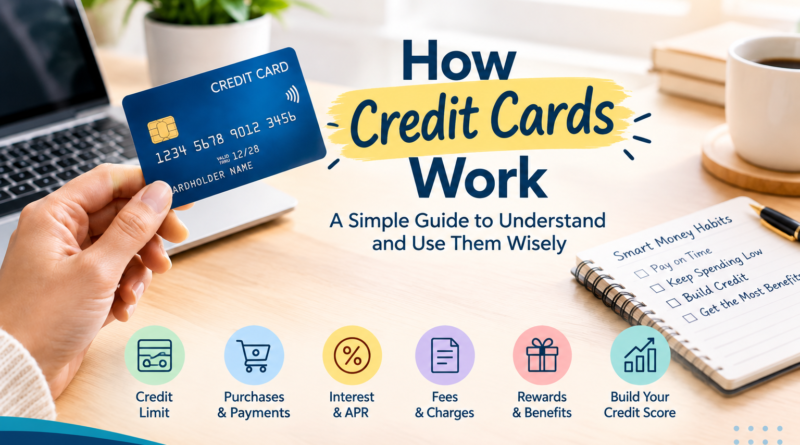
How Credit Cards Work: A Simple Guide for Beginners
How credit cards work is an important financial concept for anyone who wants to use credit responsibly. A credit card allows you to make purchases using money provided by a card issuer, with the understanding that you will repay what you borrow. Unlike a debit card, which generally takes money directly from your bank account, a credit card creates a balance that you need to pay back.
Credit cards can be useful for everyday purchases, emergencies, building credit history, earning rewards, and managing short-term expenses. However, they can also become expensive when balances are not paid on time because interest and fees may apply.
Understanding how credit cards work can help you avoid unnecessary debt and make better financial decisions. This guide explains credit limits, billing cycles, minimum payments, interest, credit scores, fees, rewards, and responsible credit card use.
What Is a Credit Card?
A credit card is a payment card that allows you to borrow money from a financial institution to pay for goods and services. The card issuer gives you a predetermined credit limit, which is the maximum amount you can generally owe on the card at one time.
For example, suppose your credit card has a $3,000 credit limit. If you spend $500 on purchases, your available credit may decrease to approximately $2,500. When you repay the $500, your available credit generally increases again.
The important difference is that the money does not normally come directly from your checking account when you make the purchase. Instead, the credit card issuer pays the merchant and adds the purchase to your credit card balance.
You are then responsible for repaying the card issuer.
How Credit Cards Work Step by Step
Understanding the basic process makes credit cards much easier to manage.
1. You Receive a Credit Limit
When you apply for a credit card, the issuer usually evaluates information such as your credit history, income, existing debts, and other application details.
Based on its approval criteria, the issuer assigns a credit limit.
For example:
- Credit limit: $5,000
- Current balance: $1,000
- Available credit: approximately $4,000
Your available credit changes as you make purchases and payments.
2. You Make a Purchase
When you use your credit card to purchase something, the transaction is processed through the card’s payment network.
Suppose you buy a $100 item.
The merchant receives payment through the payment system, while the $100 is added to your credit card account.
You now owe the credit card issuer for that purchase.
3. Your Purchases Are Added to Your Balance
Every transaction contributes to your credit card balance.
For example:
| Purchase | Amount |
|---|---|
| Groceries | $120 |
| Gas | $60 |
| Clothing | $80 |
| Restaurant | $40 |
| Total | $300 |
If you started with a zero balance, your account balance could become $300.
4. You Receive a Monthly Statement
Credit cards generally operate around billing cycles. At the end of a billing cycle, your issuer provides a statement showing important information about your account.
Your statement may include:
- Previous balance
- New purchases
- Payments
- Credits or refunds
- Interest charges
- Fees
- Statement balance
- Minimum payment
- Payment due date
Reviewing your statement regularly can help you identify mistakes or unauthorized transactions.
What Is a Credit Card Balance?
Your credit card balance is the amount you currently owe on your account.
However, you may see several different balance-related numbers, including the current balance and statement balance.
Current Balance
Your current balance generally reflects transactions that have been posted to your account up to a particular point in time.
For example, your statement may close with a balance of $600. You then make another $100 purchase before the next statement closes.
Your current balance could show $700, while your previous statement balance remains $600.
Statement Balance
The statement balance is the amount shown on your billing statement for a specific billing cycle.
If your card has a grace period and you pay the statement balance in full by the due date, you may generally avoid interest on eligible purchases, depending on the card’s terms.
What Is a Credit Limit?
A credit limit is the maximum amount the card issuer allows you to borrow on the account.
For example, if your credit limit is $2,000, your balance generally cannot exceed that amount unless the issuer permits it under its account terms.
Your credit limit can affect your credit utilization ratio.
Credit Utilization Example
Suppose you have:
- Credit limit: $5,000
- Credit card balance: $1,000
Your utilization is:
$1,000 ÷ $5,000 × 100 = 20%
A lower utilization is often viewed more favorably by credit-scoring models, although credit scores consider multiple factors and there is no universal percentage that guarantees a particular score.
Keeping balances manageable can therefore be an important part of responsible credit management.
What Is a Billing Cycle?
A billing cycle is the period during which your credit card transactions are recorded for a particular statement.
For example, imagine a billing cycle runs from June 1 through June 30.
During that period, you make several purchases. At the end of the cycle, the issuer calculates your statement balance.
The statement then provides a payment due date.
This creates a simple pattern:
Purchase → Billing cycle → Statement → Due date → Payment
Understanding this timeline can help you avoid missed payments.
What Is a Minimum Payment?
The minimum payment is the smallest amount your card issuer requires you to pay by the due date to keep the account from being treated as unpaid under the card’s terms.
For example:
- Statement balance: $1,000
- Minimum payment: $40
- Due date: July 25
Paying only $40 may keep the account current, but it does not eliminate the remaining balance.
The remaining balance can continue to accrue interest according to the card’s terms.
Why Paying Only the Minimum Can Be Expensive
Suppose you repeatedly carry a balance and make only minimum payments. Interest can increase the total amount you eventually pay.
This is why the minimum payment should generally be viewed as a requirement rather than a target.
If you can afford to do so, paying the statement balance in full can help reduce or avoid interest on eligible purchases, subject to your card’s terms.
How Credit Card Interest Works
One of the most important things to understand about credit cards is interest.
The card issuer may charge interest when you carry a balance from one billing cycle to another.
The interest rate is commonly expressed as an annual percentage rate (APR).
For example, imagine a credit card has a 24% APR.
That does not necessarily mean you simply pay 24% of your balance once each year. Credit card interest calculations can depend on the issuer’s method, daily balances, and other terms.
APR and Credit Cards
APR stands for Annual Percentage Rate.
Credit cards can have different APRs for different types of transactions, including:
- Purchases
- Cash advances
- Balance transfers
The terms of the specific credit card determine how interest is calculated.
What Is a Grace Period?
A grace period is a period during which you may be able to avoid interest on new purchases if you meet certain payment requirements.
Many credit cards provide a grace period for purchases, but the exact terms vary.
For example, if you make purchases during a billing cycle and pay the statement balance in full by the due date, you may avoid interest on those purchases.
However, grace-period rules may differ for cash advances and balance transfers.
Always read the card agreement to understand the specific terms.
Credit Cards vs. Debit Cards
Credit cards and debit cards may look similar, but they work differently.
| Feature | Credit Card | Debit Card |
|---|---|---|
| Source of money | Credit from issuer | Money from bank account |
| Borrowing involved | Usually yes | Usually no |
| Interest possible | Yes | Generally no |
| Credit history impact | Can affect credit | Usually does not build credit |
| Credit limit | Yes | Based mainly on available funds |
| Rewards | Often available | Depends on account |
| Debt risk | Higher | Generally lower |
A debit card typically uses money already available in your bank account. A credit card allows you to borrow up to an approved limit.
How Credit Cards Affect Your Credit Score
Responsible credit card use can contribute to building a positive credit history.
Credit-scoring systems may consider factors such as:
- Payment history
- Amounts owed
- Length of credit history
- Types of credit accounts
- Recent credit applications
Payment History
Making payments on time is an important part of managing credit.
Late payments can potentially hurt your credit history, depending on how late the payment is and how it is reported.
Credit Utilization
Credit utilization refers to how much of your available revolving credit you are using.
For example, if your total credit limits are $10,000 and your balances are $2,000, your utilization is 20%.
High utilization can be associated with lower credit scores, although scoring models differ.
Length of Credit History
The age of your credit accounts can also matter to some credit-scoring models.
This means closing an older account can sometimes affect your credit profile, although the impact depends on the overall circumstances.
What Are Credit Card Rewards?
Many credit cards offer rewards to encourage spending.
Common reward types include:
- Cash back
- Travel points
- Airline miles
- Hotel points
- Store rewards
For example, a card might offer cash back on certain purchases.
If you spend $1,000 on eligible purchases with a 2% cash-back rate, the rewards would be:
$1,000 × 2% = $20
However, rewards should not encourage you to spend more than you can afford to repay.
Paying interest on a balance can potentially outweigh the value of rewards.
What Are Credit Card Fees?
Credit cards can come with different fees depending on the card and issuer.
Common examples include:
Annual Fee
Some cards charge an annual fee for maintaining the account.
Late Payment Fee
A fee may apply when you fail to make at least the required payment by the due date.
Foreign Transaction Fee
Some cards charge a fee for certain transactions made outside the issuer’s country or in foreign currencies.
Cash Advance Fee
Using a credit card to obtain cash can involve a cash advance fee and potentially a higher interest rate.
Balance Transfer Fee
A balance transfer may involve a fee based on the amount transferred.
Because fees vary significantly, always check the card’s terms before applying.
What Is a Cash Advance?
A cash advance allows you to use your credit card to obtain cash.
For example, you may withdraw cash through an ATM if your card and account permit it.
However, cash advances can be expensive because they may involve:
- A cash advance fee
- A higher APR
- Different interest rules
- No traditional purchase grace period
For these reasons, cash advances should generally be understood before using them.
What Is a Balance Transfer?
A balance transfer involves moving debt from one credit card or account to another.
Some cards offer promotional balance-transfer rates for qualifying customers.
For example, imagine you have:
- Card A balance: $3,000
- Card B promotional balance-transfer offer: 0% APR for a limited period
- Balance-transfer fee: applicable according to the card terms
A balance transfer may reduce interest costs during the promotional period, but the transfer fee, promotional expiration date, and regular APR should all be considered.
What Happens If You Miss a Credit Card Payment?
Missing a credit card payment can have several consequences.
Depending on the card’s terms and how long the payment remains unpaid, you could face:
- Late fees
- Interest charges
- Loss of promotional benefits
- Possible credit-reporting consequences
A missed payment can become more serious if it remains unpaid.
One simple way to reduce the risk is to set up automatic payments for at least the required minimum amount, while still monitoring the account.
How to Use a Credit Card Responsibly
Knowing how credit cards work is only the first step. Using them responsibly is equally important.
1. Pay on Time
Make every required payment by the due date.
Consider setting up automatic payments or calendar reminders.
2. Pay the Statement Balance When Possible
If your budget allows, paying the statement balance in full can help you avoid interest on eligible purchases when your card has a grace period.
3. Keep Spending Within Your Budget
A credit limit is not the same as a spending budget.
If your card allows $5,000 of spending, that does not mean you should spend $5,000.
Your personal budget should determine how much you can afford to spend.
4. Monitor Your Account
Check your transactions regularly.
If you notice an unfamiliar transaction, contact your card issuer promptly and follow its fraud-reporting procedures.
5. Understand the Terms
Before applying for a credit card, review:
- APR
- Annual fee
- Rewards
- Foreign transaction fees
- Late fees
- Balance-transfer terms
- Cash advance terms
- Promotional offers
Example: How a Credit Card Works in Real Life
Imagine Sarah receives a credit card with a $4,000 credit limit.
During one billing cycle, she makes these purchases:
- Groceries: $250
- Gas: $100
- Clothing: $150
- Utilities: $200
Her total purchases are:
$250 + $100 + $150 + $200 = $700
At the end of the billing cycle, her statement balance is $700.
If her card has a grace period and she pays the full $700 by the due date, she may avoid interest on those eligible purchases.
If instead she pays only $50, she still owes the remaining balance, and interest may apply according to the card’s terms.
This example demonstrates why understanding the statement balance and due date is so important.
Advantages of Credit Cards
Credit cards can provide several benefits when used carefully.
Convenience
They can make online and in-store purchases easier.
Credit Building
Responsible use can help establish a credit history.
Rewards
Some cards provide cash back, points, or travel rewards.
Purchase Protection
Some cards may provide benefits such as purchase protection or extended warranties, depending on the card’s terms.
Emergency Flexibility
A credit card can provide access to credit when an unexpected expense occurs, although relying on credit for emergencies can become costly if the balance cannot be repaid.
Disadvantages of Credit Cards
Credit cards also have potential drawbacks.
High Interest Costs
Carrying a balance can result in significant interest charges.
Overspending
The ability to buy now and pay later can make it easier to spend beyond a budget.
Fees
Certain cards may charge annual, late, cash advance, foreign transaction, or other fees.
Debt Accumulation
Repeatedly carrying balances can lead to growing debt.
Credit Score Impact
Late payments and high credit utilization can negatively affect your credit profile.
Credit Card Safety Tips
Protecting your credit card information is important.
Here are some basic safety practices:
- Never share your PIN unnecessarily.
- Avoid entering card information on suspicious websites.
- Use strong passwords for online banking.
- Enable transaction alerts when available.
- Review statements regularly.
- Report lost or stolen cards quickly.
- Never share one-time verification codes with strangers.
- Be cautious of unexpected calls, emails, and messages requesting card information.
If someone asks for your full card number, security code, password, or verification code unexpectedly, verify the request through an official channel before providing any information.
How to Choose a Credit Card
There is no single credit card that is right for everyone. Your choice should depend on your financial situation and spending habits.
Consider the following factors:
Interest Rate
If you regularly carry balances, the APR can have a major effect on your borrowing costs.
Annual Fee
Compare the annual fee with the benefits you realistically expect to receive.
Rewards
Look at how rewards are earned and redeemed rather than focusing only on advertised reward rates.
Credit Requirements
Some cards are designed for people with established credit, while others may be available to people building or rebuilding credit.
Fees
Review all major fees before applying.
Promotional Offers
Understand how long promotional rates last and what APR applies afterward.
Frequently Asked Questions About How Credit Cards Work
Do credit cards use your own money?
Generally, no. When you make a purchase with a credit card, the card issuer provides the credit for the transaction, and you later repay the issuer.
Do I have to pay my credit card every month?
You generally need to make at least the required minimum payment by the due date. Paying the statement balance in full can help you avoid interest on eligible purchases when the card’s terms provide a grace period.
What happens if I pay only the minimum?
The remaining balance can continue to accrue interest according to your card’s terms. It can also take much longer to repay the debt.
Can a credit card help build credit?
Yes. Responsible credit card use, including making payments on time, can contribute to building a credit history.
Is a credit card better than a debit card?
They serve different purposes. Credit cards involve borrowing and can help establish credit, while debit cards generally use money already available in your bank account. The better option depends on your financial needs and ability to manage credit responsibly.
What is the difference between APR and interest?
APR is an annualized measure used to express the cost of borrowing, while interest is the charge applied to a balance according to the account’s terms. Credit card APRs can vary depending on the type of transaction.
Can I use a credit card for emergencies?
You can, but it is important to understand the cost. If you cannot repay the balance, interest may make the emergency expense significantly more expensive.
Final Thoughts on How Credit Cards Work
Understanding how credit cards work can help you use them as a financial tool instead of allowing them to become a source of unnecessary debt. A credit card gives you access to a predetermined amount of credit, lets you make purchases, and then requires you to repay the amount according to the card’s terms.
The most important concepts to understand are your credit limit, billing cycle, statement balance, minimum payment, due date, APR, fees, and credit utilization.
Responsible credit card use starts with spending within your budget and making payments on time. When possible, paying your statement balance in full can help you avoid interest on eligible purchases and keep borrowing costs under control.
Before applying for any credit card, compare its fees, interest rates, rewards, and terms with your financial needs. A clear understanding of the agreement can help you make informed decisions and use credit more effectively.
REad Next