
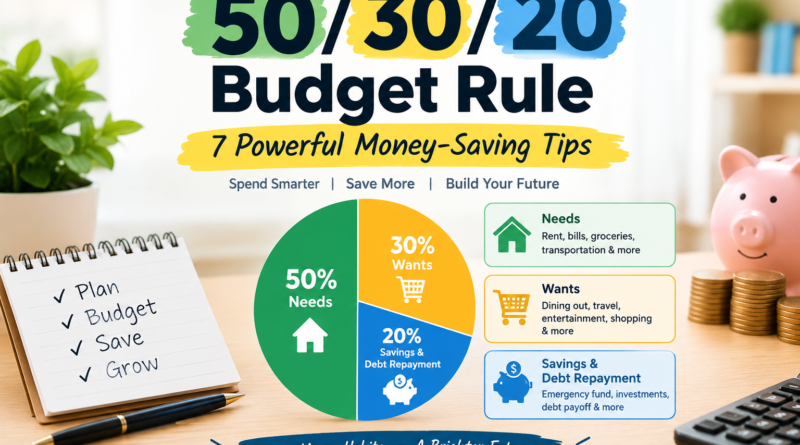
50/30/20 Budget Rule A Simple Guide to Managing Your Money
Managing money can feel difficult when you have bills to pay, savings goals to reach, and everyday expenses that keep adding up. A simple budgeting method can make the process easier by giving every part of your income a purpose. The 50/30/20 budget rule is one of the most popular approaches because it divides your after-tax income into three clear categories: needs, wants, and savings or debt repayment.
The idea is straightforward: spend 50% on essential expenses, 30% on things you enjoy, and 20% on financial goals. However, the rule is not a strict requirement. Your income, location, family situation, and financial priorities may require different percentages.
In this guide, you will learn how the 50/30/20 budget rule works, what belongs in each category, how to create a budget step by step, and how to adjust the method when your expenses do not fit the traditional percentages.
What Is the 50/30/20 Budget Rule?
The 50/30/20 budget rule is a budgeting framework that helps you divide your take-home income into three main categories:
- 50% for needs: Essential expenses you must pay to live and work.
- 30% for wants: Optional spending that improves your lifestyle.
- 20% for savings and debt repayment: Money used to build financial security and reduce debt.
The rule is designed to create balance. It encourages you to cover your basic responsibilities while still leaving room for enjoyment and future goals.
For example, if your monthly take-home income is $3,000, the traditional breakdown would look like this:
| Category | Percentage | Monthly Amount |
|---|---|---|
| Needs | 50% | $1,500 |
| Wants | 30% | $900 |
| Savings and debt repayment | 20% | $600 |
| Total | 100% | $3,000 |
The same percentages can be applied to any currency. If your monthly income is PKR 100,000, the suggested breakdown would be PKR 50,000 for needs, PKR 30,000 for wants, and PKR 20,000 for savings or debt repayment.
The most important point is that the rule is a guideline, not a law. If your rent is high or your income is limited, you may need to spend more than 50% on necessities. That does not mean your budget has failed.
How Does the 50/30/20 Rule Work?
The method begins with your after-tax income, sometimes called take-home pay. This is the money you actually receive after taxes and other deductions.
Once you know your monthly income, divide it into three categories.
1. Allocate 50% to Needs
Needs are expenses that are necessary for your basic living and ability to work. These are costs you generally cannot avoid without affecting your health, safety, housing, or daily responsibilities.
Common examples include:
- Rent or mortgage payments
- Electricity, water, and basic utilities
- Groceries and essential food
- Transportation to work or school
- Basic insurance
- Minimum debt payments
- Essential healthcare
- Necessary clothing
- Childcare required for work
For example, if your take-home income is $3,000, your needs budget would be approximately $1,500.
However, not every expense is automatically a need. A basic mobile phone plan may be essential, while an expensive upgrade may be a want. Similarly, groceries are needs, but frequent restaurant meals may belong in the wants category.
The goal is to identify what you genuinely need rather than labeling every expense as essential.
2. Allocate 30% to Wants
Wants are expenses that make life more enjoyable but are not necessary for basic survival. This category gives you flexibility to enjoy your money without feeling that budgeting means giving up everything.
Examples include:
- Dining out
- Entertainment
- Streaming subscriptions
- Hobbies
- Vacations
- Shopping for nonessential items
- Premium phone upgrades
- Gifts
- Personal care beyond basic needs
With a $3,000 monthly income, the traditional wants budget would be $900.
This category is important because a budget that allows no enjoyment can become difficult to maintain. You do not need to eliminate every optional expense. Instead, you can decide which wants matter most to you and spend intentionally.
For example, you might choose to spend more on books and hobbies while reducing spending on subscriptions you rarely use.
3. Allocate 20% to Savings and Debt Repayment
The final 20% is used to improve your financial future. This category includes money that helps you become more secure, prepare for emergencies, and reach long-term goals.
Examples include:
- Emergency fund contributions
- Retirement savings
- Investments
- Saving for a home
- Saving for education
- Extra payments toward high-interest debt
- Building a sinking fund for future expenses
With a $3,000 monthly income, this category would be $600.
If you have high-interest debt, paying it down may be a higher priority than investing additional money. You can still use the 20% category to make progress toward both goals, depending on your circumstances.
Why Use the 50/30/20 Budget Rule?
One of the biggest benefits of the 50/30/20 budget rule is its simplicity. You do not need to track dozens of categories to get started. Instead, you can focus on three broad spending groups.
It Gives Your Money a Clear Purpose
Without a budget, it is easy to spend money on small purchases and discover that little remains at the end of the month. The rule helps you decide where your income should go before you spend it.
It Encourages Savings
Saving can become an afterthought when bills and lifestyle expenses take priority. The 20% category encourages you to treat savings as a regular part of your financial plan.
It Allows Room for Enjoyment
The 30% wants category helps make budgeting more realistic. You can enjoy entertainment, hobbies, and other optional purchases while still working toward financial goals.
It Helps You Identify Spending Problems
If your needs consistently take up 70% or 80% of your income, the rule can reveal that your essential expenses are too high for your current income. This may encourage you to reduce costs, increase income, or adjust your expectations.
It Is Easy to Adjust
The percentages are not fixed. You can change them when your financial situation changes. For example, someone paying off debt may temporarily spend 20% on wants and 30% on debt repayment.
How to Create a 50/30/20 Budget Step by Step
Creating a budget becomes easier when you follow a consistent process.
Step 1: Calculate Your Monthly Take-Home Income
Start with the money you actually receive each month. If your income is fixed, this may be your regular salary after taxes.
If your income changes, such as through freelancing or business work, calculate an average based on several months of income. You can also create a budget using a conservative estimate to avoid overspending.
For example:
- Monthly take-home income: $3,000
- Traditional needs limit: $1,500
- Traditional wants limit: $900
- Traditional savings and debt repayment: $600
If you have multiple income sources, include the income you can reasonably expect to receive.
Step 2: List Your Essential Expenses
Write down your regular needs, including housing, utilities, groceries, transportation, and minimum debt payments.
For example:
| Need | Monthly Cost |
|---|---|
| Rent | $900 |
| Utilities | $150 |
| Groceries | $300 |
| Transportation | $100 |
| Insurance | $50 |
| Total Needs | $1,500 |
This example fits the traditional 50% target. Your actual expenses may be higher or lower.
Step 3: Track Your Wants
Review your spending on optional purchases. Include entertainment, dining out, shopping, subscriptions, and hobbies.
For example:
| Want | Monthly Cost |
|---|---|
| Dining out | $250 |
| Entertainment | $150 |
| Shopping | $200 |
| Hobbies | $150 |
| Subscriptions | $50 |
| Gifts and activities | $100 |
| Total Wants | $900 |
Tracking these expenses can help you identify spending that you may want to reduce.
Step 4: Set Savings and Debt Goals
Decide how you will use the 20% category. You may want to build an emergency fund, pay off debt, invest, or save for a major purchase.
For example:
| Financial Goal | Monthly Amount |
|---|---|
| Emergency fund | $200 |
| Retirement savings | $200 |
| Extra debt payment | $100 |
| Short-term savings | $100 |
| Total | $600 |
Your priorities may be different. The important thing is to give this money a clear purpose.
Step 5: Compare Your Actual Spending With the Rule
After tracking your expenses, compare your current spending with the suggested percentages.
If your needs are 60%, wants are 25%, and savings are 15%, you can decide whether you need to make changes. You do not have to reach the exact 50/30/20 split immediately.
A budget is useful when it reflects your real life and helps you make better decisions.
What Counts as a Need and What Counts as a Want?
One of the most common questions about the 50/30/20 budget rule is how to classify expenses.
The answer depends on your circumstances.
For example:
- Basic groceries: Need
- Restaurant meals: Usually a want
- Basic transportation: Need
- Luxury vehicle upgrade: Usually a want
- Essential medical treatment: Need
- Optional cosmetic service: Usually a want
- Minimum debt payment: Need
- Extra debt payment: Savings and debt repayment
Some expenses can be divided between categories. If your phone bill includes a basic service and an optional premium plan, you may consider the basic portion a need and the extra portion a want.
The purpose is not to create perfect labels. It is to understand your spending and make choices that support your goals.
How to Adjust the Rule for Your Income
The traditional 50/30/20 split may not work for everyone. If your essential expenses are high, forcing them into 50% can create unnecessary stress.
If Your Needs Are More Than 50%
You may need to spend more than half your income on housing, food, transportation, or other essentials. In that case, reduce wants first and protect your savings as much as possible.
For example, your budget might look like:
- 60% needs
- 20% wants
- 20% savings and debt repayment
This can be a practical starting point while you work on reducing expenses or increasing income.
If Your Income Is Limited
If you have a low income, your needs may take up most of your budget. You may not be able to save 20% immediately.
Start with a smaller amount, even if it is 5% or 10%. Building the habit of saving can be more important than reaching a specific percentage right away.
If You Have High-Interest Debt
If you are carrying expensive debt, you may want to reduce wants and increase debt repayment.
For example:
- 55% needs
- 15% wants
- 30% debt repayment and savings
The exact numbers depend on your situation, but the principle is to prioritize financial stability.
If You Have a High Income
A higher income may allow you to save more than 20%. You might choose to spend 50% on needs, 20% on wants, and 30% on investments or other financial goals.
The rule can be adjusted to help you build wealth faster without eliminating enjoyment.
Common Mistakes to Avoid
The 50/30/20 budget rule is simple, but it can still be misused.
Treating the Rule as a Strict Requirement
The percentages are guidelines. If your needs are higher than 50%, you are not automatically doing something wrong.
Forgetting Irregular Expenses
Some expenses do not happen every month, such as annual insurance, school fees, repairs, or holiday spending. Include these in your budget by setting aside money regularly.
Ignoring Debt Payments
Minimum debt payments belong in needs, while extra payments generally belong in the savings and debt repayment category. Make sure your debt obligations are included in your plan.
Spending the Entire Wants Category
The 30% category is a limit, not a target you must spend. If you spend less on wants, you can direct the extra money toward savings or debt repayment.
Focusing Only on Percentages
A budget should help you achieve your goals. If you are saving 20% but have no emergency fund and are struggling with high-interest debt, you may need to change how that money is allocated.
How to Make the 50/30/20 Rule Work Better
You can improve your budget by making a few practical changes.
Automate Your Savings
Set up automatic transfers to a savings account or investment account after you receive your income. This can make saving more consistent and reduce the temptation to spend the money first.
Review Your Budget Monthly
Your expenses may change over time. Review your budget each month to see whether your spending is still aligned with your goals.
Reduce Unnecessary Fixed Costs
Fixed expenses such as rent, subscriptions, insurance, and loan payments can have a large impact on your budget. Reducing even one recurring expense can create savings every month.
Use a Separate Account for Wants
Some people find it easier to manage optional spending by keeping it separate from money used for bills and savings.
Give Every Savings Goal a Name
Instead of simply saving “$600,” divide it into specific goals such as emergency savings, debt repayment, travel, or retirement. Named goals can make it easier to stay motivated.
Is the 50/30/20 Budget Rule Good for Beginners?
Yes, the 50/30/20 budget rule can be a useful starting point for beginners because it is easy to understand and does not require complicated calculations.
It helps beginners learn three important habits:
- Cover essential expenses first.
- Spend intentionally on optional purchases.
- Save regularly for future needs.
However, beginners should not feel pressured to follow the percentages perfectly. The best budget is one that reflects your actual income and expenses while helping you make progress.
If your current budget is very different from the rule, start by tracking your spending and making one improvement at a time.
Frequently Asked Questions
Can I use the 50/30/20 rule with irregular income?
Yes. You can use an average monthly income or a conservative estimate based on your recent earnings. During higher-income months, you may save more or prepare for months when income is lower.
Does the 50/30/20 rule include debt payments?
Yes. Minimum debt payments are generally considered needs, while extra debt payments can be included in the savings and debt repayment category.
What if I cannot save 20%?
Start with what you can afford. Even a small, consistent amount can help you build the habit of saving. You can increase the percentage as your income grows or expenses decrease.
Is rent a need?
Yes. Rent is generally considered a need because housing is essential. However, the amount you spend on rent may affect whether your overall needs fit within the traditional 50% target.
Should I invest the entire 20%?
Not necessarily. You may need to build an emergency fund, pay down high-interest debt, or save for short-term goals before investing more. Your financial priorities should determine how the 20% is used.
Can I change the percentages?
Yes. The rule is flexible. You can adjust the percentages to match your income, expenses, and financial goals.
Final Thoughts
The 50/30/20 budget rule is a simple way to organize your money and create a healthier financial routine. By dividing your take-home income into needs, wants, and savings or debt repayment, you can make spending decisions with more confidence.
The traditional split of 50% for needs, 30% for wants, and 20% for financial goals is a useful starting point, but it does not need to be followed perfectly. Your budget should reflect your real circumstances.
Start by calculating your income, tracking your expenses, and choosing a savings goal. Then make small adjustments over time. A consistent budget can help you control spending, reduce financial stress, and work toward a stronger financial future.
Read Next
Pingback: How to Build Wealth: 7 Smart Ways for Financial Success