
Callable Bonds: A Complete Guide to Features, Benefits, Risks, and How They Work
Introduction
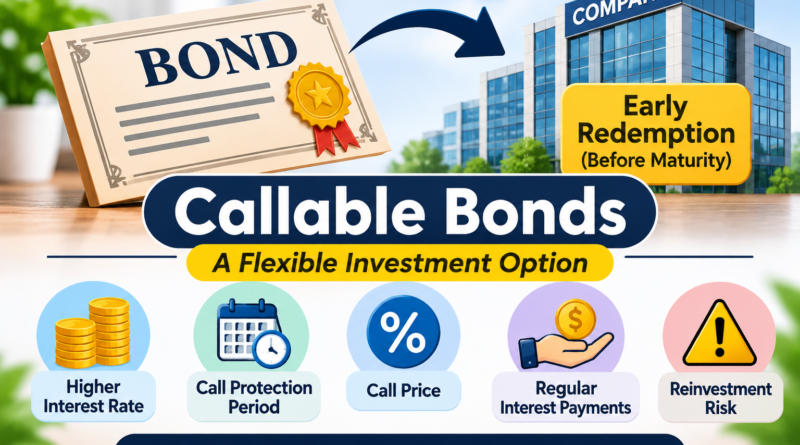
Callable Bonds are an important type of fixed-income investment that gives bond issuers the right to repay their debt before the scheduled maturity date. These bonds are commonly used by corporations, financial institutions, and government-related organizations to manage borrowing costs and maintain financial flexibility. For investors, Callable Bonds can provide regular interest payments and predictable income, but they also come with certain risks that should be understood before investing.
Unlike traditional bonds, which generally remain outstanding until maturity, Callable Bonds allow the issuer to redeem the bond early under specific conditions. This feature can become especially valuable to companies when market interest rates decline. Instead of continuing to pay a higher interest rate, the issuer may repay existing bonds and borrow money at a lower rate.
However, early repayment can create challenges for investors. If a bond is called before maturity, investors may lose the opportunity to receive future interest payments at the original rate. They may also have difficulty finding another investment offering a similar return.
Understanding how Callable Bonds work can help investors make better decisions when building a diversified portfolio. Whether you are a beginner exploring fixed-income securities or an experienced investor comparing different bond investments, learning about their structure, advantages, disadvantages, and pricing is essential.
This guide explains everything you need to know about Callable Bonds, including their characteristics, call provisions, interest rates, valuation, investment strategies, and common mistakes to avoid.
What Are Callable Bonds?
Callable Bonds are debt securities that allow the issuer to repay the borrowed amount before the bond’s scheduled maturity date. The issuer has the option to exercise this right according to the conditions established in the bond agreement.
When investors purchase a callable bond, they lend money to an organization in exchange for regular interest payments and the return of their principal amount. However, the issuer can terminate this arrangement early if the bond includes a callable provision.
For example, imagine an investor purchases a corporate bond with the following features:
- Face value: $1,000
- Annual interest rate: 7%
- Maturity period: 10 years
- Call protection: 3 years
The investor expects to receive $70 in annual interest payments for ten years. However, after three years, the company may decide to call the bond and repay the $1,000 principal amount according to its agreement.
As a result, the investor receives the principal earlier than expected and stops earning the original interest payments.
The main difference between callable and non-callable bonds is the issuer’s ability to repay the debt early. This flexibility benefits the issuer but introduces additional uncertainty for bondholders.
How Do Callable Bonds Work?
Callable Bonds work through an agreement between the bond issuer and the investor. When the bond is issued, its terms explain when and how the issuer can redeem it before maturity.
Investors receive interest payments throughout the period the bond remains outstanding. If the issuer decides to exercise the call option, it notifies investors and repays the outstanding principal according to the bond’s call provisions.
The process generally follows several steps.
1. Bond Issuance
A company or organization issues bonds to raise money for business operations, expansion, infrastructure, or other financial requirements.
The issuer establishes important terms, including:
- Face value
- Coupon rate
- Maturity date
- Payment frequency
- Call date
- Call price
Investors purchase the bonds and become creditors of the issuing organization.
2. Regular Interest Payments
After purchasing a callable bond, investors receive interest payments according to the agreed schedule.
For example, a $5,000 bond with a 6% annual coupon rate provides $300 in yearly interest.
Depending on the bond agreement, payments may be made annually, semiannually, or at another specified interval.
3. Issuer Evaluates Market Conditions
The issuer may review market interest rates and its current financial position.
If market interest rates fall below the bond’s existing coupon rate, refinancing may become attractive.
For example, a company paying 8% interest may prefer to issue new debt at 5% rather than continue paying the higher rate.
4. Early Redemption
If the bond is callable and the call conditions are satisfied, the issuer can repay the outstanding principal before maturity.
Some bonds require the issuer to pay a call premium in addition to the face value.
5. Investment Ends
Once the bond is called and redeemed, investors stop receiving future coupon payments.
They can use the returned principal to purchase other investments, hold cash, or invest in another fixed-income security.
Key Features of Callable Bonds
Callable Bonds have several characteristics that distinguish them from traditional fixed-income securities.
1. Early Redemption Option
The most important feature is the issuer’s right to repay the bond before maturity.
This option provides financial flexibility to the borrowing organization. However, it means investors cannot always depend on receiving interest payments for the entire original term.
2. Call Protection Period
Call protection is the period during which the issuer cannot redeem the bond through an ordinary optional call.
For example, a ten-year bond may have a five-year call protection period. This means the issuer generally cannot exercise its ordinary call option during the first five years.
Call protection gives investors some certainty about receiving interest payments during the protected period.
3. Call Price
The call price is the amount the issuer must pay to redeem the bond early.
It may be equal to the bond’s face value or higher, depending on the agreement.
For example, if a $1,000 bond has a call price of $1,050, the investor receives an additional $50 when the bond is redeemed.
4. Coupon Rate
The coupon rate represents the annual interest percentage paid on the bond’s face value.
Callable Bonds sometimes offer higher coupon rates than comparable non-callable bonds because investors take on additional call risk.
5. Maturity Date
The maturity date is the original date when the bond is scheduled to repay its principal.
However, if the issuer exercises its call option earlier, the actual repayment occurs before the stated maturity date.
6. Call Schedule
The call schedule explains when the issuer can redeem the bond and the applicable redemption prices.
Some bonds have multiple call dates with different prices. Investors should review this schedule carefully before purchasing.
Types of Callable Bonds
Callable Bonds can be classified according to the conditions under which the issuer can redeem them.
Understanding these categories helps investors compare different bond structures.
1. Optional Callable Bonds
Optional Callable Bonds give the issuer the right to redeem the bond on specified dates or during an agreed period.
The issuer can decide whether exercising the call option is financially beneficial.
For example, a company may issue a 15-year bond that becomes callable after five years. If market interest rates decrease, the company may redeem the bond and refinance its debt at a lower rate.
2. Extraordinary Callable Bonds
Extraordinary Callable Bonds include provisions that allow early redemption when specific unexpected events occur.
These events are defined in the bond agreement.
Examples may include:
- Certain tax law changes
- Specific regulatory developments
- Particular project-related events
- Other contractually defined circumstances
The exact conditions depend on the security’s legal documentation.
3. Sinking Fund Callable Bonds
Some bonds include sinking fund provisions that require the issuer to gradually repay a portion of the outstanding debt.
The issuer may retire bonds through scheduled repayments, open-market purchases, or other methods described in the agreement.
This arrangement can reduce the issuer’s outstanding debt over time.
4. Make-Whole Callable Bonds
Make-whole provisions allow issuers to redeem certain bonds early by paying a calculated amount designed to compensate investors for the loss of future interest payments.
The redemption price is generally calculated using the present value of remaining scheduled payments and a specified discount rate.
These provisions are commonly designed to make early redemption less financially attractive to issuers.
Callable Bonds vs. Non-Callable Bonds
Callable and non-callable bonds both provide fixed-income investment opportunities, but their repayment structures are different.
A non-callable bond generally requires the issuer to repay the principal at maturity, subject to any other applicable contractual provisions.
A callable bond gives the issuer an additional early redemption option.
| Feature | Callable Bonds | Non-Callable Bonds |
|---|---|---|
| Early redemption | Issuer may redeem early | Generally not permitted through an optional call |
| Interest payments | May end before maturity | Usually continue until maturity |
| Investor uncertainty | Higher | Lower regarding optional redemption |
| Coupon rate | Often higher | May be lower |
| Issuer flexibility | Greater | More limited |
| Reinvestment risk | Higher | Generally lower from issuer call activity |
| Investment planning | Requires attention to call dates | Usually more predictable |
For example, an investor comparing two bonds may find that a callable bond offers a 7% coupon while a similar non-callable bond offers 6%.
The additional interest may appear attractive, but the callable bond could be redeemed early if market conditions become favorable to the issuer.
Therefore, investors should evaluate the additional yield against the possibility of early repayment.
Why Do Companies Issue Callable Bonds?
Companies issue callable bonds because they provide greater control over their long-term borrowing costs.
Businesses often borrow money to finance expansion, acquire assets, purchase equipment, and manage daily operations. However, market conditions can change significantly during a bond’s lifetime.
Callable provisions allow companies to respond to these changes.
1. Lower Borrowing Costs
The most common reason for calling bonds is a decline in market interest rates.
Suppose a company issued bonds at an 8% coupon rate. A few years later, similar companies can borrow money at 5%.
The issuer may redeem its existing bonds and replace them with new debt carrying a lower interest rate.
This can reduce future financing expenses.
2. Better Financial Management
Callable Bonds allow businesses to adjust their debt structures when their financial requirements change.
A company may want to replace expensive borrowing with more affordable financing or reorganize its liabilities.
3. Greater Financial Flexibility
Long-term financial planning is difficult because economic conditions, business performance, and borrowing costs change over time.
Callable provisions give issuers an opportunity to respond to these developments.
4. Changing Business Requirements
A company may experience an improvement in cash flow, receive additional funding, or decide to reduce outstanding debt.
In certain situations, calling bonds may help simplify its financial obligations.
Advantages of Callable Bonds for Investors
Although callable bonds introduce additional uncertainty, they can provide several benefits to investors.
1. Potentially Higher Interest Rates
Callable Bonds often offer higher coupon rates than comparable non-callable bonds.
The additional interest helps compensate investors for accepting the possibility of early redemption.
For income-focused investors, this may create an attractive opportunity.
2. Regular Income
As long as the bond remains outstanding and the issuer meets its obligations, investors receive scheduled interest payments.
These payments can provide a predictable source of income.
3. Opportunity to Earn a Call Premium
Some callable bonds include a premium above face value when the issuer redeems them early.
For example, an investor holding a $1,000 bond may receive $1,030 upon redemption.
The additional amount can improve the total return, although it does not necessarily compensate for all lost future interest.
4. Portfolio Diversification
Callable Bonds can be included in a diversified fixed-income portfolio alongside government securities, corporate bonds, and other debt investments.
Diversification can help investors spread exposure across different issuers and securities.
5. Suitable for Certain Market Conditions
Investors who understand interest rate movements and call provisions may find opportunities in callable bonds.
However, the potential benefits depend on the purchase price, bond terms, market conditions, and issuer’s credit quality.
Disadvantages and Risks of Callable Bonds
Before investing, it is important to understand the risks associated with Callable Bonds.
1. Reinvestment Risk
Reinvestment risk is one of the biggest disadvantages.
When an issuer calls a bond, investors receive their principal earlier than expected. They must then find another investment opportunity.
If market interest rates have declined, replacement investments may offer lower returns.
For example, an investor purchases a bond paying 7% annual interest. After three years, the issuer calls it because new borrowing rates have fallen to 4%.
The investor may struggle to find another investment offering the original 7% return.
2. Limited Capital Appreciation
Callable Bonds may experience limited price appreciation when market interest rates decline.
This happens because the probability of early redemption increases when the existing coupon becomes more expensive for the issuer.
As a result, the bond’s market price may not rise as much as a comparable non-callable bond.
3. Uncertain Investment Period
Investors may plan to hold a bond for ten or fifteen years, but an early call can shorten the actual investment period.
This makes long-term income planning more difficult.
4. Interest Rate Risk
Callable Bonds are also exposed to changes in market interest rates.
When interest rates rise, bond prices generally decline. When rates fall, bond prices generally increase, but the issuer’s call option can limit potential gains.
This creates an unusual risk-return pattern for investors.
5. Credit Risk
Callable Bonds issued by companies are subject to credit risk.
If the issuer experiences financial difficulties, it may fail to make scheduled interest payments or repay principal.
The presence of a call option does not guarantee that investors will receive their money.
6. Premium Payment Risk
Investors who purchase callable bonds above their face value may experience losses if the issuer redeems them at a lower call price.
For example, an investor pays $1,080 for a bond with a $1,000 face value. If the bond is called at $1,020, the investor loses $60 on the principal redemption before considering interest payments.
This is why purchase price and call schedule matter.
Understanding Yield to Call and Yield to Maturity
Two important measurements help investors evaluate callable bonds: Yield to Call and Yield to Maturity.
What Is Yield to Call?
Yield to Call (YTC) estimates the annualized return an investor may receive if the issuer redeems the bond on a specified call date.
It considers:
- Purchase price
- Coupon payments
- Call price
- Time remaining until the call date
For callable securities, Yield to Call is particularly important because the bond may not remain outstanding until maturity.
What Is Yield to Maturity?
Yield to Maturity (YTM) estimates the annualized return an investor may receive if the bond remains outstanding until its scheduled maturity and all promised payments are made.
It considers the purchase price, coupon payments, face value, and remaining time to maturity.
Yield to Worst
Yield to Worst (YTW) is another important measurement.
It generally represents the lowest calculated yield among specified contractual redemption scenarios, including maturity and applicable call dates.
Investors often use it to understand the less favorable potential yield outcomes.
| Measurement | Meaning |
|---|---|
| Yield to Call | Estimated return if the bond is called on a specified date |
| Yield to Maturity | Estimated return if held until maturity |
| Yield to Worst | Lowest yield among applicable redemption scenarios |
Investors should compare these measurements rather than relying only on the coupon rate.
How to Calculate the Return on Callable Bonds
Calculating potential returns helps investors understand whether a callable bond is suitable for their financial goals.
Consider the following example.
An investor purchases a callable bond with these details:
| Bond Information | Amount |
|---|---|
| Face value | $1,000 |
| Purchase price | $980 |
| Annual coupon rate | 6% |
| Annual interest | $60 |
| Call price | $1,020 |
| Possible call date | After 5 years |
The investor receives $60 in annual interest for five years if the bond remains outstanding during that period.
Total interest received:
$60 × 5 = $300
The investor also receives $1,020 when the bond is called.
Total cash received:
$300 + $1,020 = $1,320
Initial investment:
$980
Total dollar gain:
$1,320 − $980 = $340
This represents the total gain before taxes, transaction costs, and the time value of money.
However, the annualized return is different from simply dividing the gain by the purchase price. A proper Yield to Call calculation accounts for the timing of each payment.
Investors can use financial calculators or spreadsheet functions to estimate the annualized yield.
How Interest Rates Affect Callable Bonds
Interest rates have a major influence on the value and call probability of callable bonds.
When market interest rates decline, existing bonds with higher coupon rates become more attractive to investors.
However, the issuer may decide to redeem these bonds to reduce borrowing costs.
When market interest rates increase, calling an existing bond becomes less attractive because the issuer would probably need to replace it with more expensive financing.
The following table explains the general relationship.
| Market Condition | Possible Effect |
|---|---|
| Interest rates decline | Call probability may increase |
| Interest rates increase | Call probability may decrease |
| High existing coupon rate | Greater refinancing incentive |
| Low existing coupon rate | Less incentive to call |
| Strong refinancing conditions | Early redemption may become attractive |
This relationship explains why callable bonds can behave differently from traditional bonds during changing interest rate environments.
How to Evaluate Callable Bonds Before Investing
Investors should examine several important factors before purchasing callable bonds.
1. Review the Call Schedule
Always check the earliest call date and subsequent redemption dates.
A bond that becomes callable after two years has a different risk profile from one protected against ordinary calls for seven years.
2. Compare Coupon Rates
Compare the coupon rate with the yields offered by similar non-callable bonds.
A higher coupon may provide additional income, but it should be evaluated against the possibility of early redemption.
3. Check the Issuer’s Credit Rating
Credit ratings can help investors evaluate the financial strength of a bond issuer.
However, ratings are opinions rather than guarantees, and investors should review the issuer’s financial condition independently.
4. Calculate Yield to Worst
Yield to Worst helps investors compare possible returns under applicable redemption scenarios.
It can provide a more conservative view than relying only on Yield to Maturity.
5. Understand the Call Premium
Check whether the bond offers additional compensation when redeemed early.
Also review whether the premium decreases over time.
6. Consider Your Investment Goals
Investors who depend on long-term predictable income may prefer securities with lower call risk.
Those who can manage reinvestment opportunities may be more comfortable holding callable bonds.
Are Callable Bonds a Good Investment?
Callable Bonds can be a suitable investment for people seeking regular interest income and willing to accept the possibility of early redemption.
However, they are not automatically better than non-callable bonds simply because they offer higher coupon rates.
Their suitability depends on several factors, including:
- Investment time horizon
- Income requirements
- Interest rate expectations
- Issuer credit quality
- Purchase price
- Call protection period
- Yield to worst
For example, an investor who wants stable income over fifteen years may prefer a non-callable bond with a competitive yield.
On the other hand, someone who can reinvest returned principal may consider a callable bond offering a higher yield.
The most important point is to understand the conditions under which the issuer can redeem the security.
Common Mistakes Investors Should Avoid
Investors sometimes focus too much on the advertised coupon rate and overlook important contractual details.
Here are some common mistakes to avoid.
Ignoring the Call Date
Buying a bond without checking its earliest call date can create unexpected investment outcomes.
Always understand when early redemption becomes possible.
Focusing Only on Coupon Rates
A high coupon rate does not necessarily mean a higher overall investment return.
Purchase price, call premium, and redemption timing also matter.
Overlooking Reinvestment Risk
Investors should consider what they will do with their principal if the bond is called.
A replacement investment may offer a lower interest rate.
Ignoring Credit Quality
A high coupon may reflect greater issuer credit risk.
Investors should examine the financial strength of the organization rather than choosing bonds based on interest payments alone.
Paying Too Much Above Face Value
Purchasing a callable bond at a substantial premium can increase the risk of losing money if the issuer redeems it early.
Always compare the purchase price with the potential call price.
Callable Bonds and Portfolio Diversification
Portfolio diversification involves spreading investments across different asset classes, securities, industries, and issuers.
Callable Bonds can contribute to a fixed-income allocation, but investors should avoid concentrating too much of their money in securities with similar call features.
For example, an investor may combine:
- Government bonds
- Non-callable corporate bonds
- Callable corporate bonds
- Short-term Treasury securities
- Money market investments
This approach can help balance income opportunities, interest rate exposure, and liquidity needs.
Investors should also consider the relationship between bond maturities and their financial goals.
A diversified portfolio does not eliminate investment risk, but it can reduce dependence on a single security or issuer.
Frequently Asked Questions (FAQs)
1. What are Callable Bonds in simple terms?
Callable Bonds are debt securities that allow the issuer to repay the borrowed money before the scheduled maturity date. Investors receive interest payments until the bond is redeemed.
2. Why do companies issue Callable Bonds?
Companies issue Callable Bonds to maintain financial flexibility and potentially reduce borrowing costs. If market interest rates decline, they may repay expensive existing debt and replace it with cheaper financing.
3. Are Callable Bonds risky?
Yes. Callable Bonds involve reinvestment risk, interest rate risk, credit risk, and uncertainty about how long the investment will remain outstanding.
4. Do Callable Bonds pay higher interest?
They often offer higher coupon rates than comparable non-callable bonds because investors accept the possibility of early redemption. However, this is not guaranteed in every bond offering.
5. What happens when a Callable Bond is called?
When a bond is called, the issuer repays its principal according to the call provisions. Investors stop receiving future interest payments after redemption.
6. What is a call premium?
A call premium is an additional amount paid above the bond’s face value when the issuer redeems it early. Not all callable bonds include a premium.
7. What is the difference between Yield to Call and Yield to Maturity?
Yield to Call estimates the return if the bond is redeemed on a specified call date, while Yield to Maturity estimates the return if it remains outstanding until its scheduled maturity.
8. Can investors refuse a bond call?
Generally, no. If the issuer exercises a valid call option according to the bond agreement, investors must follow the redemption terms.
9. Are Callable Bonds better than Non-Callable Bonds?
Neither type is always better. Callable Bonds may offer higher interest rates, while non-callable bonds generally provide greater certainty about their scheduled investment period.
10. Can Callable Bonds be sold before maturity?
Yes. Many callable bonds can be traded in the secondary market, depending on their market availability and trading conditions. Their prices may be affected by interest rates, credit quality, and call provisions.
Conclusion
Callable Bonds are useful fixed-income securities that provide issuers with the flexibility to repay debt before the scheduled maturity date. They can offer investors regular interest payments and potentially higher coupon rates compared with similar non-callable bonds. However, their early redemption feature introduces reinvestment risk, uncertain investment periods, and limitations on potential price appreciation.
Before investing, it is important to understand the call schedule, call protection period, redemption price, issuer credit quality, and available yield measurements. Investors should also compare Yield to Call, Yield to Maturity, and Yield to Worst to develop a clearer understanding of potential returns.
Ultimately, Callable Bonds can play a role in a diversified investment portfolio when their benefits and risks match an investor’s financial objectives. Careful research and a clear understanding of bond agreements can help investors make more informed fixed-income investment decisions.
Read Next