
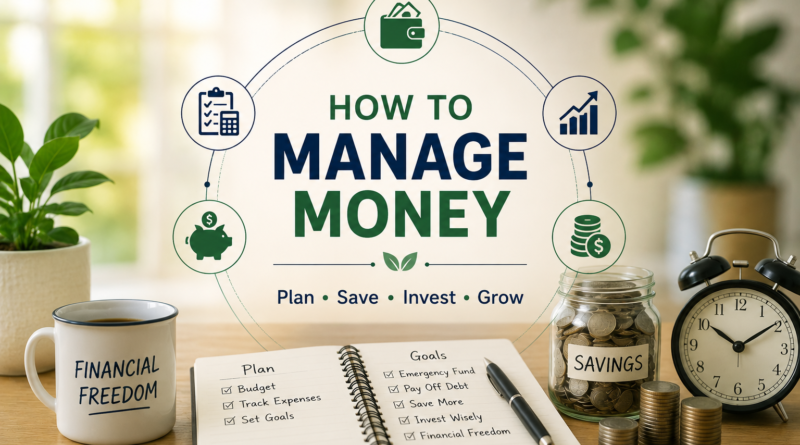
How to Manage Money: A Practical Guide to Better Financial Habits
Managing money well is one of the most important skills for building a stable financial future. Whether you earn a regular salary, run a business, work as a freelancer, or are just starting your financial journey, learning how to manage money can help you control spending, reduce financial stress, save consistently, and work toward your long-term goals.
Good money management does not mean avoiding every purchase or living an extremely restrictive lifestyle. Instead, it means understanding where your money goes and making intentional decisions about how you earn, spend, save, invest, and use credit. Even small improvements in your financial habits can make a meaningful difference over time.
In this guide, we will explore practical ways to manage money, create a realistic budget, control unnecessary spending, build an emergency fund, manage debt, save for important goals, and develop habits that support long-term financial stability.
What Does It Mean to Manage Money?
Money management is the process of organizing and controlling your personal finances. It includes several important activities, such as budgeting, saving, spending, investing, managing debt, and planning for future financial needs.
When you know how much money comes into your household and where it goes each month, it becomes easier to make better financial decisions. Without a plan, people can spend too much on unnecessary purchases and have little money left for savings or important goals.
Effective money management generally involves:
- Tracking your income and expenses
- Creating a realistic monthly budget
- Separating needs from wants
- Building an emergency fund
- Paying bills on time
- Managing credit and debt carefully
- Saving for short- and long-term goals
- Investing according to your goals and risk tolerance
- Reviewing your financial plan regularly
The goal is not perfection. The goal is to create a financial system that you can consistently follow.
Why Is Money Management Important?
Learning how to manage money can provide greater control over your financial life. When your spending is organized and your financial priorities are clear, you are less likely to rely on credit for unexpected expenses or feel uncertain about your finances.
Good money management can help you:
Reduce Financial Stress
Knowing that your bills, savings, and essential expenses are accounted for can make your finances feel more predictable.
Avoid Unnecessary Debt
A clear budget can show you whether you can afford a purchase before you use a credit card or take out a loan.
Build Savings
Consistent saving allows you to prepare for emergencies, large purchases, education, retirement, and other financial goals.
Reach Financial Goals
Whether your goal is buying a home, starting a business, traveling, or building long-term wealth, proper money management gives you a framework for reaching it.
Prepare for Unexpected Expenses
An emergency fund can provide a financial cushion when unexpected costs arise.
Start by Understanding Your Income
The first step in learning how to manage money is understanding exactly how much money you have available.
Calculate your average monthly income after taxes and other regular deductions. If your income changes from month to month, such as when you are self-employed or work as a freelancer, consider using a conservative average based on several months of income.
Your income may include:
- Salary or wages
- Freelance income
- Business income
- Rental income
- Investment income
- Side-hustle income
- Other regular sources of money
Knowing your actual income gives you a realistic starting point for your budget.
If your income varies significantly, avoid building your lifestyle around your highest-earning months. Instead, base essential spending on an amount you can reasonably expect to receive.
Create a Simple Monthly Budget
A budget is one of the most useful tools for managing money. It gives every part of your income a purpose and helps you identify spending that may not support your financial goals.
Start by listing your monthly expenses.
Fixed Expenses
These expenses generally remain similar each month:
- Rent or mortgage
- Insurance
- Loan payments
- Internet bills
- Subscription services
- School or education payments
Variable Expenses
These can change from month to month:
- Groceries
- Transportation
- Electricity
- Dining out
- Entertainment
- Clothing
- Personal expenses
Once you list your expenses, compare the total with your income.
If expenses are higher than income, you need to reduce spending, increase income, or both. If you have money left over, decide how much should go toward savings, investments, debt repayment, and personal spending.
Follow a Spending Plan That Fits Your Life
There is no single budgeting method that works for everyone. A good budget should be realistic enough that you can follow it consistently.
Some people prefer dividing their income into categories such as:
- Essential expenses
- Savings
- Debt repayment
- Investments
- Lifestyle spending
Another approach is to give every dollar a specific purpose before the month begins.
The important thing is not which budgeting method you choose. The important thing is that your plan reflects your actual income, expenses, and financial priorities.
A budget that is too restrictive may be difficult to maintain. Leave some room for entertainment and personal spending so that your financial plan remains sustainable.
Track Your Spending
Creating a budget is only the beginning. You also need to monitor your actual spending.
For at least one or two months, record your purchases and categorize them. You may discover that small expenses are taking up more of your income than expected.
For example, a person may think they spend very little on dining out, but several small restaurant orders or coffee purchases each week can add up.
You can track spending using:
- A spreadsheet
- A budgeting app
- A notebook
- Your bank statements
- A simple monthly expense list
Review your spending at the end of each week. This makes it easier to identify problems before they become large.
Separate Needs From Wants
One of the most important money management skills is understanding the difference between needs and wants.
Needs are expenses required for basic living and financial responsibilities, such as:
- Housing
- Food
- Utilities
- Transportation
- Healthcare
- Insurance
- Required debt payments
Wants are things that improve your lifestyle but are not essential, such as:
- Expensive restaurants
- Entertainment
- Luxury purchases
- Unnecessary subscriptions
- Frequent shopping
- Upgrading perfectly functional devices
This does not mean you should never spend money on wants. Instead, make sure your wants fit within your budget after your important financial obligations are covered.
Build an Emergency Fund
An emergency fund is money set aside for unexpected expenses or financial difficulties.
Unexpected situations can include:
- Job loss
- Major car repairs
- Medical expenses
- Emergency travel
- Home repairs
- Unexpected family expenses
Without emergency savings, you may need to rely on high-interest debt or credit cards when something goes wrong.
Start with a small target if necessary. Even saving a modest amount regularly can help create a financial cushion. As your finances improve, work toward building several months of essential expenses in accessible savings.
Keep emergency money separate from everyday spending so that you are less tempted to use it for non-essential purchases.
Pay Your Bills on Time
Late payments can create unnecessary fees and may negatively affect your credit history depending on the type of account and your local financial system.
Create a system for paying bills before their due dates. You can use:
- Calendar reminders
- Automatic payments
- Banking alerts
- A monthly bill checklist
Before using automatic payments, make sure enough money is available in the account to avoid overdrafts or other problems.
Paying bills on time also helps you understand your monthly financial commitments and avoid surprises.
Manage Debt Carefully
Debt can be useful when managed responsibly, but high-cost debt can make it difficult to build wealth.
Start by listing all your debts, including:
- Credit cards
- Personal loans
- Student loans
- Auto loans
- Other outstanding balances
Record the balance, interest rate, minimum payment, and due date for each debt.
After making required minimum payments, consider directing additional money toward higher-interest debt. Reducing expensive debt can free up more income for saving and investing later.
Avoid taking on new debt for purchases you cannot comfortably afford.
Control Impulse Spending
Impulse purchases can quietly damage a budget. Online shopping, limited-time promotions, social media advertising, and easy access to credit can encourage people to buy things they did not originally plan to purchase.
One useful strategy is to introduce a waiting period.
For example, before buying an expensive non-essential item, wait 24 hours or longer. During that time, ask yourself:
- Do I actually need this?
- Can I afford it without using debt?
- Will I still want it next week?
- Does this purchase support my financial goals?
- Is there a cheaper alternative?
A short pause can prevent many unnecessary purchases.
Save Money Automatically
Saving becomes easier when it happens automatically rather than depending entirely on willpower.
If your bank or employer provides an appropriate automatic transfer option, consider directing part of your income toward a dedicated savings account soon after you receive your income.
You can create separate savings goals for:
- Emergency expenses
- Travel
- Education
- A vehicle
- A home
- Retirement
- Other major purchases
Even small, regular contributions can create a strong savings habit.
Set Clear Financial Goals
Money management becomes easier when you know what you are working toward.
Instead of saying, “I want to save more,” create a specific goal.
For example:
Short-term goal: Build a small emergency fund.
Medium-term goal: Save for a vehicle or education expense.
Long-term goal: Build retirement savings and long-term investments.
For each goal, determine how much you need and when you want to reach it. Then calculate how much you need to save regularly.
Clear goals make it easier to decide whether a purchase is worth delaying your progress.
Start Investing After Building a Financial Foundation
Saving and investing are related but different activities.
Savings are generally intended for money you may need relatively soon, while investing is typically used for longer-term goals and involves the possibility of losing money.
Before investing, consider establishing a basic emergency fund and managing high-cost debt.
Depending on your goals, risk tolerance, and time horizon, investments may include assets such as:
- Stocks
- Bonds
- Exchange-traded funds
- Mutual funds
- Index funds
- Other investment products
Investment choices should be based on your individual circumstances rather than short-term market excitement.
Diversification can also help spread exposure across different investments rather than depending heavily on one asset.
Avoid Lifestyle Inflation
Lifestyle inflation happens when spending increases as income increases.
For example, someone receives a raise and immediately upgrades their car, moves into a more expensive home, increases dining expenses, and takes on additional subscriptions.
Although higher income can support a better lifestyle, increasing expenses too quickly can prevent financial progress.
When your income increases, consider directing part of the additional money toward:
- Savings
- Debt repayment
- Investments
- Emergency reserves
- Important financial goals
You can enjoy some of the extra income while still strengthening your financial position.
Review Subscriptions and Recurring Expenses
Recurring expenses can be easy to forget because they may seem small individually.
Review your:
- Streaming services
- Apps
- Software subscriptions
- Gym memberships
- Online services
- Insurance plans
- Phone plans
Ask whether each service is still providing enough value.
Canceling unnecessary subscriptions can create recurring savings without requiring major lifestyle changes.
Increase Your Income When Possible
Money management is not only about cutting expenses. Increasing income can also improve your financial position.
Depending on your skills and circumstances, possible options may include:
- Developing professional skills
- Negotiating compensation
- Freelancing
- Starting a small business
- Working additional hours
- Creating a side income stream
- Selling products or services
When income increases, avoid automatically increasing every category of spending. Use additional income strategically to improve savings, reduce debt, or invest for long-term goals.
Review Your Finances Every Month
Your financial situation can change over time. That is why money management should be an ongoing process rather than something you do once.
At the end of each month, review:
- Total income
- Essential expenses
- Discretionary spending
- Savings contributions
- Debt payments
- Investment contributions
- Progress toward financial goals
Look for areas that need improvement.
Maybe grocery spending was higher than expected, or perhaps you successfully saved more than planned. Use this information to make your next month’s budget more realistic.
Common Money Management Mistakes to Avoid
Even people with good incomes can experience financial problems if they develop poor money habits.
Spending More Than You Earn
A high income does not automatically create financial security. If expenses consistently exceed income, financial problems can grow quickly.
Ignoring Small Expenses
Small purchases can become significant when repeated frequently.
Having No Emergency Savings
Without an emergency fund, unexpected expenses can force you into debt.
Using Credit for Everyday Overspending
Credit cards can be convenient, but relying on them to finance a lifestyle you cannot afford can create expensive debt.
Never Reviewing Your Budget
A budget should change as your income, expenses, and goals change.
Making Emotional Financial Decisions
Fear, excitement, social pressure, and market hype can influence financial decisions. Take time to evaluate important purchases and investments rationally.
A Simple Step-by-Step Money Management Plan
If you are wondering how to manage money from the beginning, follow this simple process:
Step 1: Calculate your monthly income.
Know exactly how much money you have available.
Step 2: Track your expenses.
Record your spending for several weeks to understand your habits.
Step 3: Create a realistic budget.
Separate essential expenses, financial goals, and discretionary spending.
Step 4: Reduce unnecessary expenses.
Look for subscriptions, purchases, and habits that do not provide enough value.
Step 5: Build emergency savings.
Start small and increase your emergency fund over time.
Step 6: Manage high-cost debt.
Pay required minimums and consider prioritizing expensive debt.
Step 7: Set financial goals.
Choose specific short-, medium-, and long-term objectives.
Step 8: Automate saving.
Make regular saving part of your financial routine.
Step 9: Invest for appropriate long-term goals.
Choose investments based on your goals, time horizon, and risk tolerance.
Step 10: Review your plan regularly.
Adjust your budget whenever your financial circumstances change.
How to Manage Money With a Small Income
You do not need a high income to begin improving your money habits.
When income is limited, focus first on essential expenses and avoid unnecessary debt. Track every major expense and identify areas where small reductions are possible.
Instead of trying to save a large amount immediately, choose a realistic amount that you can consistently save.
For example, saving a small amount every month may be more sustainable than setting an unrealistic target and eventually giving up.
As your income grows, increase your savings rate gradually.
Final Thoughts on How to Manage Money
Learning how to manage money is not about becoming perfect with every financial decision. It is about developing consistent habits that help you make intentional choices with your income.
Start by understanding your income, tracking your expenses, creating a realistic budget, and separating needs from wants. Then focus on building emergency savings, managing debt, setting financial goals, and investing responsibly for the future.
The most effective money management system is one that you can actually maintain. Small improvements made consistently can become powerful financial habits over time.
Remember that personal finance is different for everyone. Your income, expenses, responsibilities, goals, and risk tolerance all affect the right approach for you. Review your financial plan regularly and make changes as your circumstances evolve.
The earlier you develop strong financial habits, the more control you can have over your money and your long-term financial future.
Read Next
Pingback: Money Management Tips: 10 Smart Ways to Build Financial Security